A practical guide to natural textiles
How to Choose Linen Pillowcases: Weave, Fit, and Care
A good pillowcase is a small piece of fabric with a nightly job: to sit comfortably against your face, protect the pillow beneath it, and stand up to repeated washing. Linen brings a distinctive texture and breathable feel to that task, but pillowcases differ in weave, finishing, construction, and dimensions. Knowing what to look for can make the choice less about labels and more about how the fabric will work in your bedroom.
Linen begins as flax, a plant whose long fibers are spun into yarn and woven into cloth. The resulting fabric has a character that is easy to recognize: a slightly irregular surface, a dry, tactile hand, and a drape that feels less slick than many finely finished cotton fabrics. Those qualities are not flaws to be smoothed away. They are part of linen’s appeal—and part of what makes one pillowcase feel different from another.
When comparing linen pillowcases, consider the whole object. Fiber content tells you what the cloth is made from; weave and finish influence its hand and surface; seams and cuffs affect how it sits on a pillow; dimensions determine whether it fits; and care instructions shape its life in your laundry routine. Thread count alone cannot describe all of these things, and it is not a reliable shortcut for judging linen quality.
This guide takes a close look at those practical details. Whether you prefer a crisp, structured case or a soft, relaxed one, a few careful checks can help you choose linen bedding that suits both your sleeping habits and your household’s approach to care.
Start with the fiber, not the promise
The word “linen” refers to fabric made from flax fibers. Product descriptions may also use terms such as “organic,” “French linen,” or “European flax.” These phrases can provide useful context, but they answer different questions. Fiber content identifies the material; origin describes where the flax was grown or where fabric was made; and an organic certification, when documented, indicates that the product meets a defined standard for particular stages of production.
Read the full specification rather than assuming that a place name tells the whole story. Flax may be grown in one country and woven in another. A pillowcase might, for example, be described as made from French-grown flax and woven in Portugal. That is a more complete account of its route through the supply chain than a broad label alone. If certification matters to you, look for the named standard and confirm that it applies to the item you are considering.
Also check whether the case is made from 100% linen or from a blend. A blend may be designed to combine different fibers’ characteristics, but it will not feel or behave exactly like a pure linen fabric. Neither choice is automatically right for every sleeper. The important point is to know what you are buying and compare like with like.
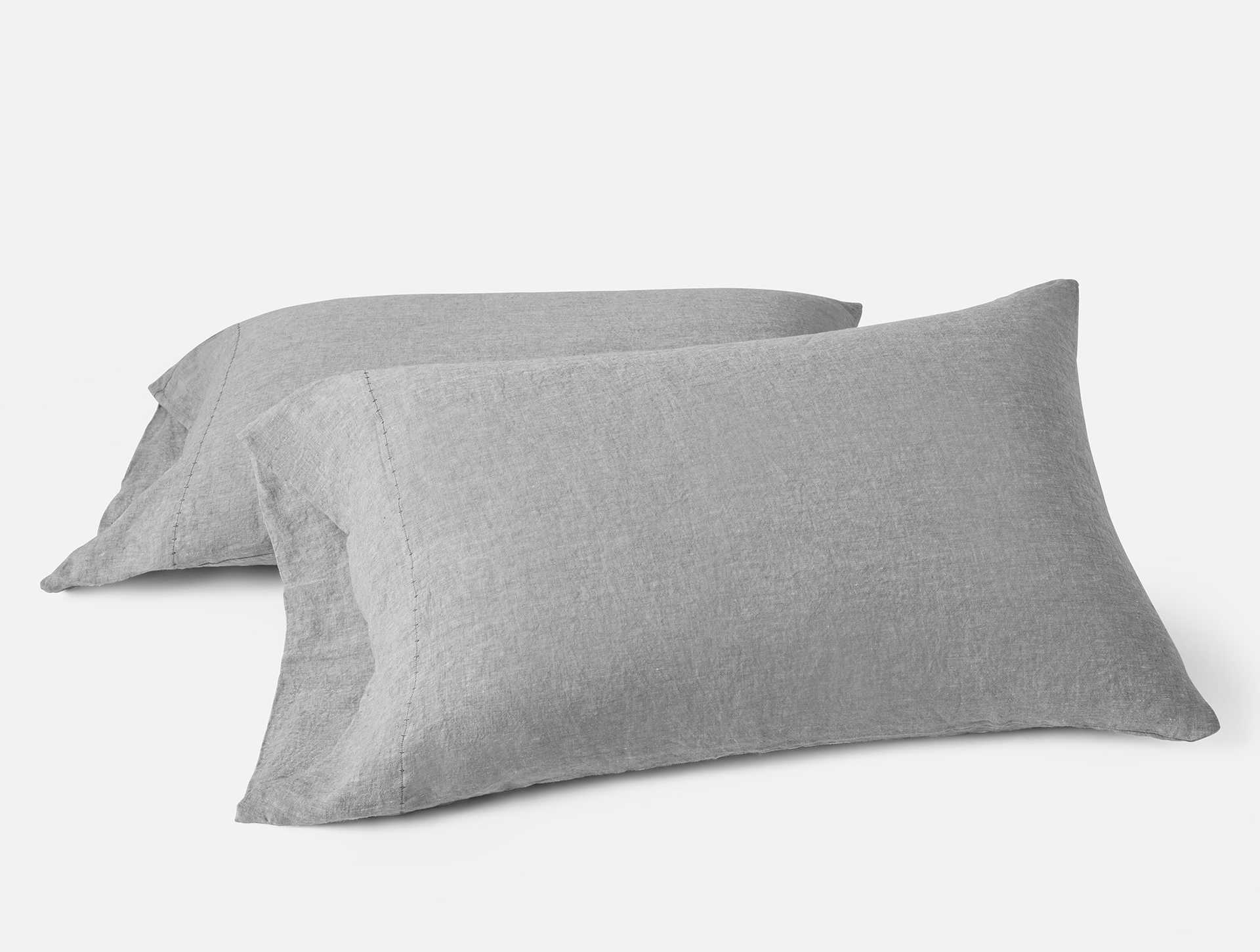
For a clearly described example, Organic Relaxed Linen Pillowcases are listed as GOTS-certified organic flax linen, with flax grown in France and linen woven in Portugal. Their product details also specify pick-stitched cuffs, a plant-based finish, and a care routine. Those particulars offer a more useful basis for comparison than a general claim that a pillowcase is simply “natural” or “premium.”
Understand weave and texture
Weave is the arrangement of yarns crossing one another to form cloth. In everyday shopping, the word may be used broadly, and descriptions do not always provide technical details about the weave structure. Still, the surface and construction can tell you something about the experience you are likely to have. Look for close-up descriptions, fabric weight if provided, and terms such as washed or garment-washed. When possible, handle a sample or compare the fabric in person.
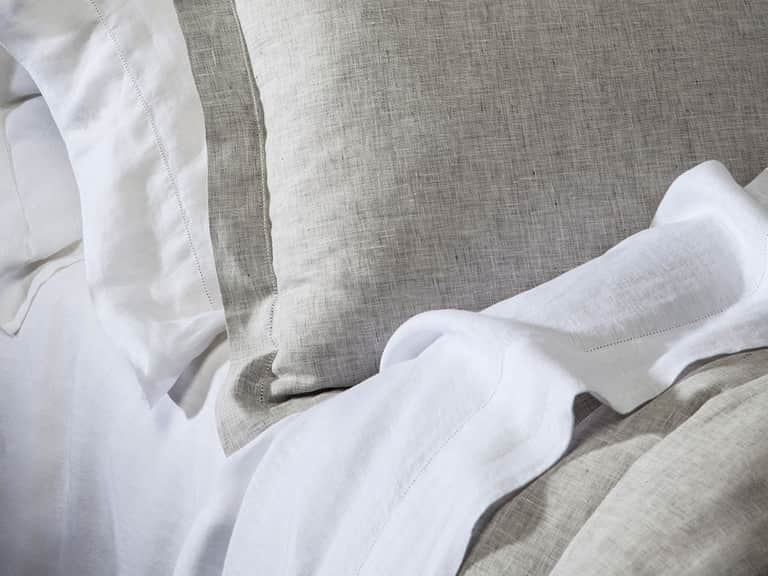
Linen’s characteristic slubs—small variations in yarn thickness—create a softly uneven surface. The fabric may feel textured rather than perfectly smooth, and the degree of texture varies with the yarn, weave, and finishing process. A relaxed or washed finish can soften the hand and give the material a more lived-in appearance before its first wash. A firmer finish may feel more structured at the beginning.
Neither texture nor softness is a simple measure of durability. A very smooth surface is not automatically stronger, and a pronounced slub is not by itself evidence of poor construction. Consider how the cloth feels, whether the seams appear secure, and whether the maker provides clear care guidance. Linen often changes with use: regular washing can make it feel more supple, though the pace and degree of that change depend on the fabric and how it is laundered.
Airflow is another reason many people choose linen for bedding. Linen’s open, textured construction can allow air to move through the fabric, while the fiber interacts with moisture. The actual feel depends on the specific weave, cloth weight, room temperature, humidity, and an individual sleeper’s preferences. “Breathable” is a helpful general description, not a guarantee that every linen pillowcase will feel identical or keep every person cool in every setting.
Product copy sometimes emphasizes thread count. That measurement describes the number of threads in a given area, but it does not capture fiber quality, yarn size, weave, finishing, or workmanship. It is especially unhelpful when used as the sole comparison between different kinds of fabric. With linen, pay greater attention to composition, construction, feel, and care instructions than to a single number.
Look closely at the cuff and seams
The cuff is the finished band at the opening of many pillowcases. It may be plain, folded, piped, or decorated with stitching. A cuff can add a tailored edge and help the case lie neatly on the bed, but its appearance is only one consideration. Check that the seam is straight and secure, that the opening is practical for inserting the pillow, and that the finish does not feel irritating against your skin.
Pick stitching, a small visible stitch detail sometimes used along a cuff, creates a restrained decorative line. Its presence can signal attention to finishing, but it should not replace a close look at the rest of the construction. If a product listing gives few details, seek information about seam finishing, closures, included pieces, and whether the pillowcase is sold as a pair.
Think about the opening too. Some cases use an envelope-style closure, while others have a simple open end or a different fastening. Each design has trade-offs: an envelope can help keep a pillow from slipping out, while an uncomplicated opening may be easier to put on and remove. The best choice depends on your pillow shape, how often you change linens, and what you find comfortable.
Measure for a dependable fit
Even beautifully made pillowcases are inconvenient if they are too tight, too loose, or too short for the pillow they need to cover. Pillowcase sizing is not perfectly uniform across every maker, so check the stated measurements rather than relying only on labels such as Standard, Queen, or King. Compare the case dimensions with the pillow’s measurements, and note whether the listing gives the flat dimensions of the case or a size category.
Measure the pillow while it is lying flat, from edge to edge. If it is unusually thick or generously filled, include that in your decision: a tightly packed pillow can take up more space than its nominal width and length suggest. A case with little extra room may be difficult to put on and may pull at the seams. A case that is much larger can leave excess fabric at the end, though some sleepers prefer a looser fit.
Before ordering, check all of the following:
- Length and width: Compare the stated case dimensions with your pillow’s actual dimensions.
- Size naming: Confirm whether a “Standard/Queen” option covers both sizes or describes a particular fit range.
- Pair or single: Check how many pillowcases are included; decorative covers are often sold individually.
- Closure and opening: Make sure the design works with the pillow and is easy to remove for washing.
- Fit notes: Look for any guidance about pillow depth, oversized inserts, or expected shrinkage.
Careful measuring matters even more when pairing cases with pillows from different brands. The word “King,” for instance, is a useful starting point, not a substitute for dimensions. If your pillow falls between common sizes, review the return and exchange terms before purchasing.
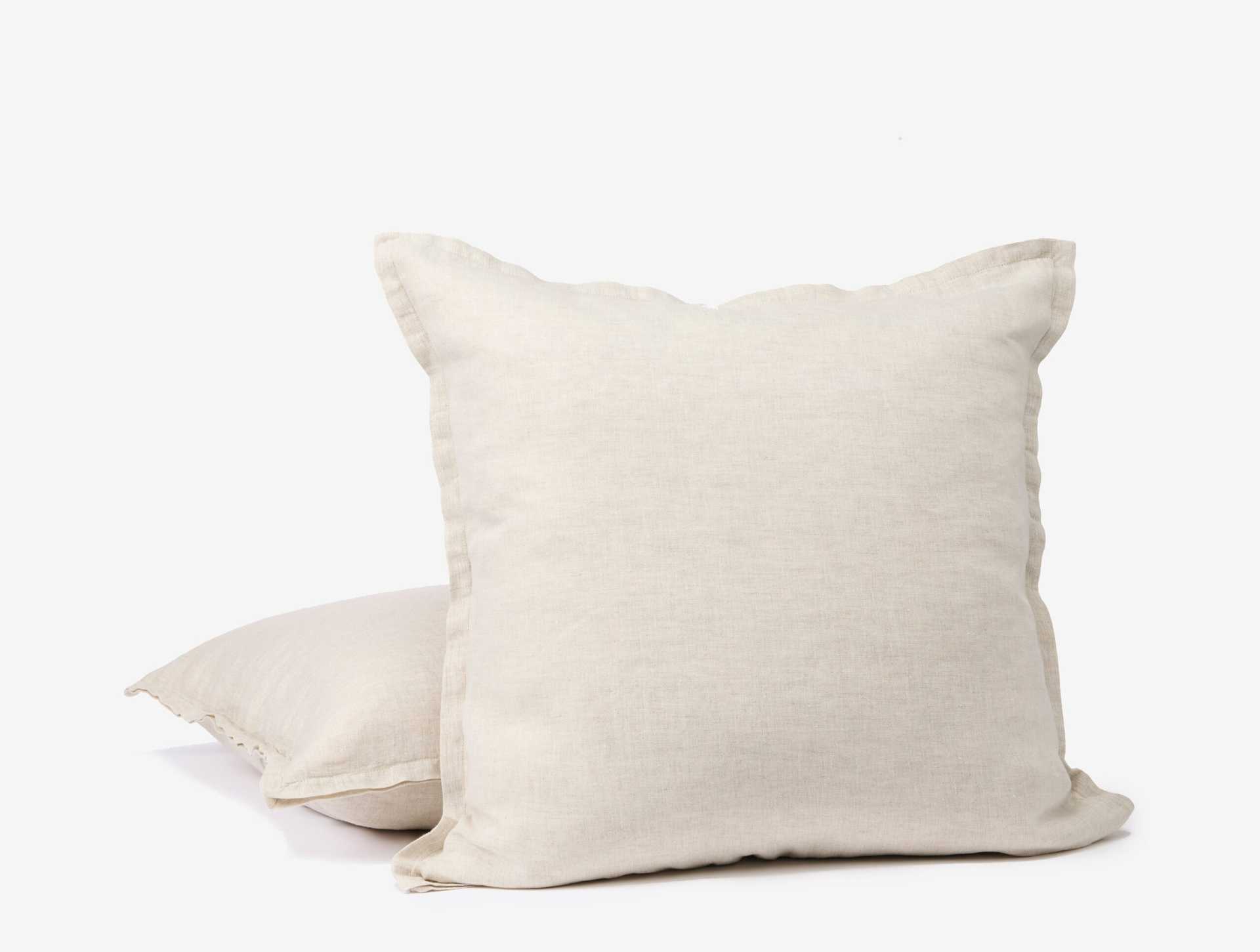
Do not confuse a pillowcase with a decorative pillow cover. A sleeping pillowcase is designed for regular contact with the face and for frequent laundering. A decorative cover is usually intended for an accent cushion, may have a different opening or construction, and may be sold without an insert. The Organic Relaxed Linen Decorative Pillow Cover, for example, is identified as a cover for a decorative pillow, with its insert sold separately. Its linen may coordinate with bedding, but the product type and intended use are different from a pair of sleeping pillowcases.
Choose for the feel you actually enjoy
Linen has a distinct hand that some people come to appreciate more with time. Others prefer the smoother, more uniform feel of another fabric. Neither response is unusual. If you have not slept on linen before, consider whether you enjoy a visible texture and a relaxed surface, or whether a crisp and sleek finish is more familiar and comfortable to you.
Temperature is personal, too. Linen is commonly valued for airflow and moisture management, but a pillowcase is only one part of the sleep environment. Pillow fill, mattress materials, room ventilation, bedding layers, and climate all play a role. A breathable case may be a useful choice for someone who dislikes a heavy, close-feeling surface, but it cannot determine sleep comfort on its own.
Color and finish can influence the way linen looks as it settles into everyday use. Natural fibers often have subtle variation, and a washed finish can make a bed feel less formal. Neutral shades are easy to combine, while deeper or brighter colors can become focal points. If you are building a coordinated set, check that pillowcases and sheets are from compatible fabric ranges; matching names do not always mean identical finishes or dye lots.
When shopping online, use the written specifications to narrow the field, then look for any available fabric samples or clear return policies. A product description can explain fiber content and care, but it cannot fully reproduce the feel of cloth against your skin.
Wash linen gently and consistently
Good care begins with the label attached to the specific pillowcase. Linen products do not all have identical finishes, dyes, or construction, and instructions can differ. Follow the maker’s guidance first. A typical gentle routine may call for cold water, a mild detergent, a low-agitation cycle, and low heat or air drying, but the correct method is the one specified for your item.
Before washing, separate pale and dark colors, close zippers if present, and avoid overloading the machine. Crowding can increase friction and leave less room for fabrics to rinse and move freely. Washing pillowcases with similar items can help limit snagging from hooks, rough fasteners, or heavier textiles. Use detergent in a measured amount; more soap does not necessarily mean cleaner fabric and may make rinsing less effective.
High heat and aggressive cycles can place unnecessary stress on natural fibers. If the care label allows machine drying, a low setting is generally gentler than a hot, prolonged cycle. Remove linen while it is still slightly damp if you plan to smooth it or iron it. Linen’s natural creases are part of its relaxed appearance, so ironing is a matter of preference rather than an essential step.
Do not use bleach unless the manufacturer specifically permits it. Harsh chemicals can affect color and fiber condition. For a stain, act promptly: blot rather than rub, check the fabric’s care instructions, and test any stain treatment on an inconspicuous area when appropriate. Avoid applying heat until you are confident the mark has been removed, since heat can make some stains harder to treat.
After washing, dry the case fully before storing it. A clean, dry linen cupboard with space for air circulation is a better place for bedding than a damp or tightly packed container. Rotate several sets if you own them; regular rotation gives each set time between uses and reduces the wear placed on a single pair.
Think beyond the first wash
A new linen pillowcase may feel different after several washes. Some begin with a soft, relaxed finish; others feel firmer and ease with use. That evolution is part of the material’s appeal, but it is not a reason to ignore quality or care. Repeated washing, high temperatures, and rough handling can still shorten a textile’s useful life.
Durability is best understood as the outcome of several factors: fiber quality, yarn and weave, seam construction, how often the case is used, and how it is washed and dried. Marketing terms such as “long lasting” are worth weighing alongside concrete details. Look for clear fiber information, robust finishing, precise sizing, and care directions you can realistically follow.
It is also useful to ask how a product fits into a larger buying decision. A pillowcase you can care for at home, use regularly, and continue to enjoy is often more practical than one whose appeal depends on a demanding routine. Choosing a material thoughtfully and maintaining it well can help you get longer use from household textiles, though no single fiber or label guarantees a particular lifespan.
A simple checklist before you buy
When several options seem similar, compare them using a consistent checklist. This makes the decision clearer and keeps attractive photography or broad claims from overshadowing the details that matter in daily use.
- Composition: Is the case 100% linen, or a blend? Is the fiber source described?
- Certification: If organic certification matters, is a recognized standard named for the product?
- Texture and finish: Is the fabric described as washed, relaxed, crisp, or otherwise finished?
- Construction: What kind of cuff, seam, and opening does it have?
- Dimensions: Do the actual measurements match your pillow?
- What is included: Is the listing for one case, a pair, or a decorative cover without an insert?
- Care: Can you follow the washing and drying instructions comfortably?
- Return terms: Can you exchange the case if the fit or feel is not right?
The right pillowcase is a thoughtful fit
Choosing linen pillowcases is less about finding a single perfect specification than understanding how the details work together. Fiber content establishes what the fabric is; weave and finish shape its texture; cuffs and seams influence its construction; dimensions determine the fit; and routine care helps preserve it over time. Thread count may appear on a label, but it cannot stand in for that complete picture.
Take a moment to check measurements, read the care label, and decide what kind of surface you want beside your face each night. Linen’s airy character and evolving softness can make it a rewarding bedding choice for people who enjoy natural texture. The best pillowcase is ultimately the one that fits your pillow, suits your preferences, and feels practical enough to use and care for night after night.